
Repair What Is Damaged. Preserve What Is Still Strong.
Restorative dentistry is about more than replacing what has been lost. It is about protecting healthy tooth structure, restoring comfortable function, and creating dental work that belongs naturally in your smile.
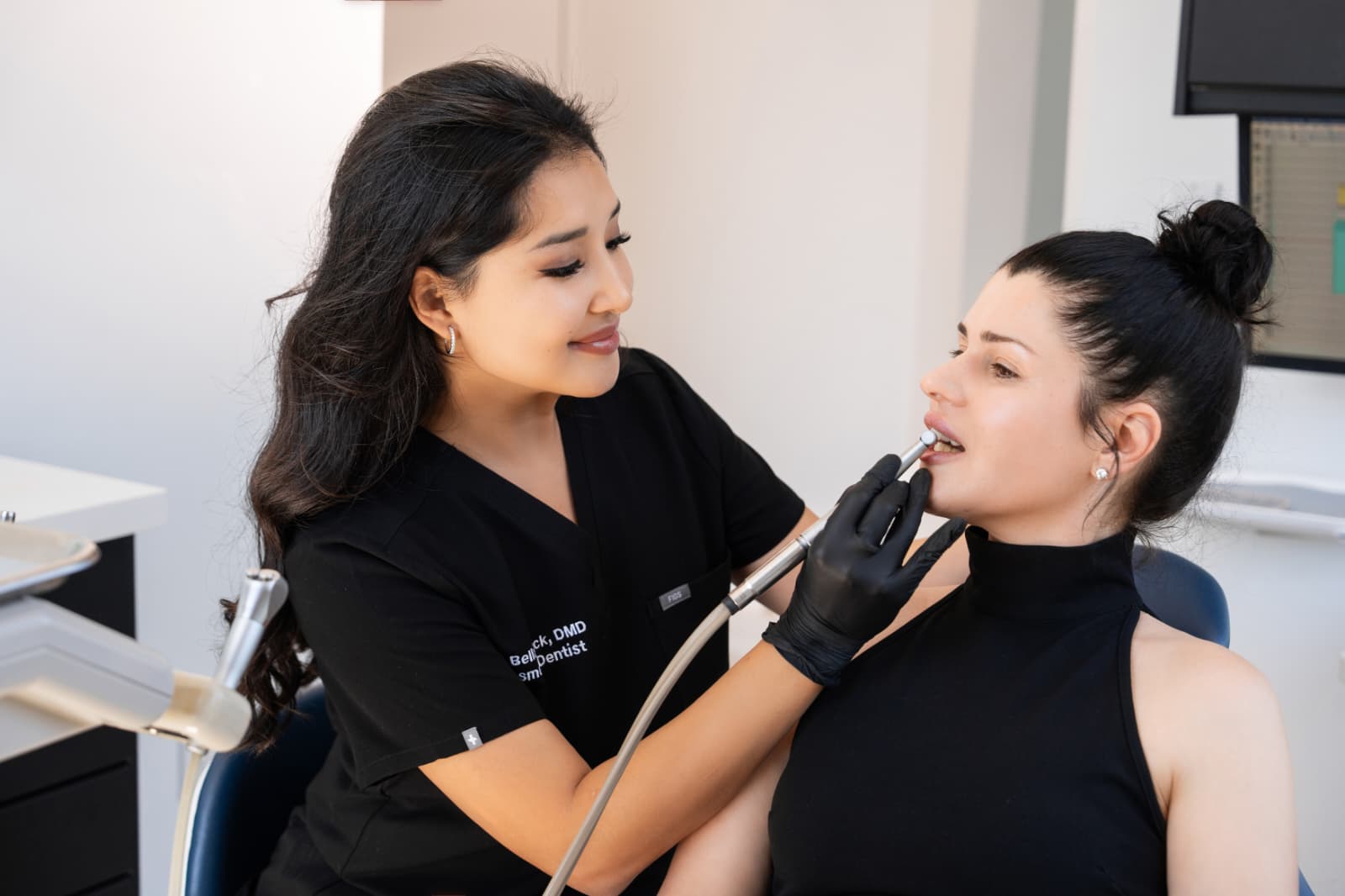
At B Dental Studio, Dr. Bella Beck approaches every restorative decision with intention. Before recommending a crown, bridge, implant, or more comprehensive treatment, she evaluates what can reasonably be preserved and which option offers the right balance of strength, function, appearance, and long-term care.
Preserve.
Restore.
The right treatment. Not more treatment.
The Right Treatment.
Not More Treatment.
A damaged tooth does not automatically require the most extensive procedure. Dr. Bella evaluates the location and severity of the damage, the amount of healthy structure remaining, symptoms, bite forces, gum and bone health, existing dental work, and the long-term outlook for the tooth.
Whenever clinically appropriate, she considers conservative restorative options before recommending full coverage or tooth replacement.
When more extensive treatment is necessary, it is planned carefully, explained clearly, and designed to feel like a natural part of your smile.
You may need a restorative evaluation if
Tap anything that sounds like you. There are no wrong answers, and nothing here is a diagnosis.
Select anything that applies.
Your selections simply help us understand what you have noticed before your visit.
Seven ways to restore a smile.
From protecting one compromised tooth to rebuilding an entire arch, each option is chosen for the situation in front of us, never by default.
Strength and Protection for a Compromised Tooth
A dental crown is a custom restoration that covers the visible portion of a tooth. It may be recommended when a tooth is too damaged or weakened to be predictably restored with a filling, inlay, onlay, or bonding.
A crown may be considered for
- A significantly cracked or fractured tooth
- Extensive decay
- A very large or failing filling
- A weakened tooth after root canal treatment
- Severe wear or loss of tooth structure
- A tooth that requires substantial structural support
- Replacement of an aging or poorly fitting crown
- Restoration of a dental implant
Dr. Bella carefully evaluates whether full coverage is necessary. When enough healthy tooth structure remains, a more conservative restoration may be discussed.
When a crown is the appropriate option, its shape, color, contours, bite, and relationship to the surrounding teeth are designed to restore both function and a natural appearance.
A Fixed Solution for Missing Teeth
A dental bridge is a fixed restoration that replaces one or more missing teeth. It uses neighboring teeth, dental implants, or a combination of support to hold the replacement tooth or teeth in position.
A bridge may help
- Restore the appearance of a missing tooth
- Improve chewing function
- Support clearer speech in selected cases
- Maintain continuity within the smile
- Stabilize the bite
- Reduce unwanted movement of neighboring teeth
A traditional bridge usually requires treatment of the supporting teeth. For that reason, Dr. Bella considers the health of those teeth, existing restorations, bone support, bite forces, hygiene, and alternative options before recommending a bridge.
Rebuilding a Missing Tooth From the Foundation Up
A dental implant is placed into the jawbone to replace the root portion of a missing tooth. After appropriate healing, it can support a custom implant crown, bridge, or implant-supported restoration.
Dental implants may be considered for
- One missing tooth
- Several missing teeth
- Support for a bridge
- Improved stability of a removable denture
- Replacement of teeth that cannot be predictably restored
Implant treatment may involve several stages
- Clinical examination and diagnostic imaging
- Evaluation of gum and bone health
- Implant placement
- Healing and integration
- Design of the final restoration
- Ongoing maintenance
Some patients may require additional procedures or coordinated treatment with another dental specialist before the final restoration is completed.
A Coordinated Plan for Complex Dental Needs
Full-mouth restoration, sometimes called full-mouth reconstruction, is a comprehensive treatment plan for patients with multiple damaged, worn, missing, or failing teeth.
It is not one standardized procedure. It is a carefully sequenced combination of treatments selected according to the patient’s condition and goals.
A full-mouth restoration may address
- Extensive tooth wear
- Multiple cracked or broken teeth
- Numerous large or failing restorations
- Missing teeth
- Bite instability
- Reduced chewing function
- Changes in tooth length or facial support
- Aging crowns, bridges, or dental work
- A combination of functional and cosmetic concerns
Treatment may include
- Biomimetic restorations
- Inlays or onlays
- Dental crowns
- Dental bridges
- Dental implants
- Implant-supported restorations
- Root canal treatment
- Replacement of failing dental work
- Bite evaluation and protection
- Cosmetic refinements when appropriate
Dr. Bella considers the entire system rather than treating each tooth in isolation. Function, appearance, bite, gum health, bone support, comfort, and long-term maintenance must work together.
Treating Infection While Preserving the Tooth
Inside every natural tooth is a space containing soft tissue commonly called the dental pulp. When this tissue becomes inflamed, infected, or irreversibly damaged, root canal treatment may be needed to relieve the source of the problem and preserve the tooth.
Root canal treatment may be considered when there is
- Deep decay approaching or reaching the pulp
- A crack or fracture involving the inner tooth
- Significant inflammation or infection
- Persistent sensitivity to hot or cold
- Pain when biting or chewing
- Swelling or tenderness near the tooth
- An abscess associated with the tooth
- Damage caused by trauma
- A tooth that has darkened after injury
During root canal treatment, the affected tissue inside the tooth is removed, the internal spaces are cleaned and sealed, and the tooth is later restored as needed.
Depending on the tooth’s condition, Dr. Bella may coordinate care with an endodontist, a dentist who specializes in root canal diagnosis and treatment.
Personalized Options for Replacing Multiple Teeth
When several or all teeth are missing, the appropriate restoration should support more than appearance. It should help restore function, comfort, stability, and confidence.
Removable Partial Dentures
A partial denture replaces several missing teeth while fitting around the remaining natural teeth.
Complete Dentures
A complete denture replaces all teeth in the upper or lower arch and is supported by the gums and underlying structures.
Implant-Supported Dentures
Dental implants may be used to improve the support, retention, or stability of a removable denture.
Fixed Implant-Supported Restorations
In selected cases, multiple implants may support a restoration that remains fixed in the mouth and is removed only by a dental professional when necessary.
The right option depends on
- The number and condition of remaining teeth
- Gum and bone health
- Anatomy and available space
- Medical history
- Bite and jaw relationships
- Hygiene capabilities
- Desired level of stability
- Treatment goals and budget
- Willingness and ability to maintain the restoration
No single solution is right for every patient. Dr. Bella explains the practical differences between available options so you can make an informed decision.
When Something Cannot Wait
Dental emergencies can be painful, frightening, and difficult to evaluate on your own. Contact B Dental Studio as soon as possible if you experience sudden pain, swelling, trauma, or damage to a tooth or restoration.
Urgent dental concerns may include
- Severe or persistent tooth pain
- A broken, cracked, or knocked-out tooth
- Facial or gum swelling
- A dental abscess or suspected infection
- Uncontrolled bleeding from the mouth
- Pain when biting
- A lost filling or crown
- A broken bridge, denture, or restoration
- Trauma involving the teeth, lips, gums, or jaw
- Sudden sensitivity accompanied by pain
- A loose adult tooth
- Pain or swelling after dental treatment
Examination and imaging.
A clinical examination and diagnostic imaging show the whole picture: the space, the bone, the neighboring teeth, and how everything fits together before anything is planned.
Gum and bone health.
An implant needs a healthy foundation. Bone support, gum health, medical history, and other factors are evaluated to confirm whether an implant is appropriate for you.
Implant placement.
The implant is placed into the jawbone to replace the root portion of the missing tooth. Some patients may need additional procedures or coordinated specialist care first.
Healing and integration.
Time for the implant to integrate with the surrounding bone. This stage is quiet by design and it is what gives the final restoration its stability.
The final restoration.
A custom implant crown, bridge, or implant-supported restoration is designed to fit the bite, match the neighboring teeth, and look like it was always there.
Ongoing maintenance.
An implant is not identical to a natural tooth. Professional care and home maintenance protect the result for the long term. Individual results may vary.
Restored teeth that still look like your own.
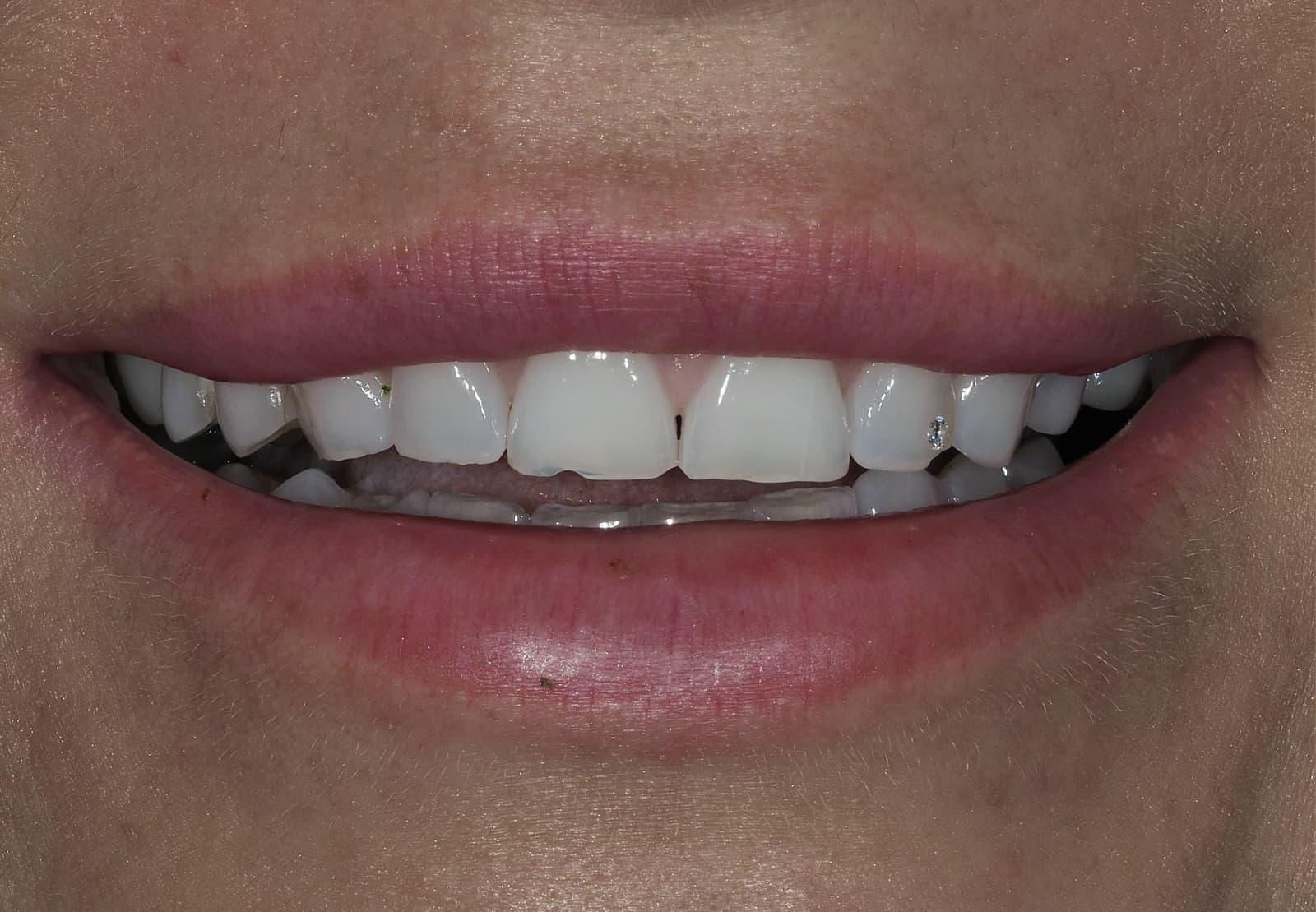
Real restorative work completed at B Dental Studio. Tap a film to watch it with sound and see how the tooth reads next to everything around it.
Every case is different. Treatment, materials, and outcomes depend on your own teeth, gums, bite, and goals. Individual results may vary.
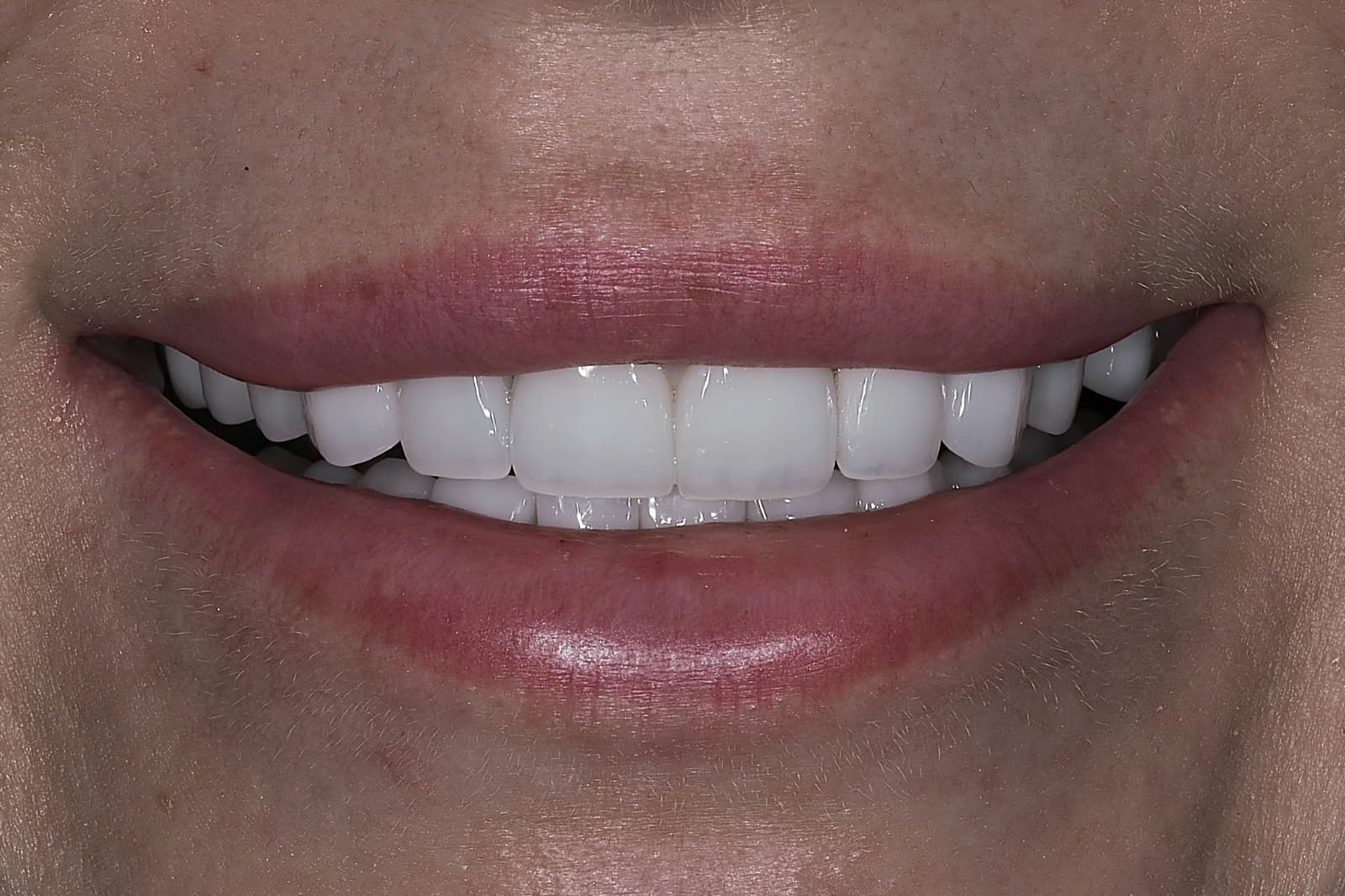
Drag to see the difference.
Pull the handle across to compare before and after. Notice that the goal is not a whiter, louder smile. It is a smile that looks like it was always there.
 Before
After
Before
After
Photographs of patients treated at B Dental Studio. Individual results may vary.
Is it urgent, or is it an emergency?
Tap what you are experiencing. This is guidance for where to turn first, not a diagnosis. When in doubt, call us.
Urgent dental concerns
Signs that need immediate medical help
Tell us what is happening.
Select anything that applies and we will point you to the right first call.
Time matters
Six steps, in order. Tap each one as you go.
- Handle the tooth by the crown, not the root
- Do not scrub or scrape the root
- If it is dirty, gently rinse it without removing attached tissue
- If possible, place it back in its socket without forcing it
- If that is not possible, keep it moist in an appropriate tooth-preservation solution or milk
- Contact a dentist immediately
Do not wait to see whether the tooth feels better.
The first objective is to identify the source and severity of the problem.
An emergency visit may resolve the problem immediately, or it may be the first stage of a larger treatment plan.
- A focused examination
- Diagnostic imaging when appropriate
- Evaluation of pain, swelling, infection, or trauma
- Stabilization of a damaged tooth or restoration
- Discussion of immediate and long-term treatment options
- Referral or coordination with a specialist when necessary
Pick the sentence that sounds like you.
Each one leads to a sensible first step, and a booking link that already knows what you are asking about.
These are navigation suggestions, not diagnoses. An examination and appropriate imaging are required before treatment can be recommended.
Six steps from problem to plan.


Understand the Problem
We begin with your symptoms, concerns, dental history, and what you want to restore.
Evaluate the Foundation
Dr. Bella examines the teeth, gums, bite, existing dental work, and supporting structures. Diagnostic imaging may be recommended.
Preserve What Is Healthy
Before planning replacement, we determine which teeth and structures may be predictably maintained.
Compare the Options
When more than one treatment is reasonable, Dr. Bella explains the differences in tooth preservation, function, appearance, timing, maintenance, and limitations.
Restore With Intention
Each restoration is designed with attention to strength, fit, bite, proportion, and natural appearance.
Protect the Result
Professional care, home hygiene, monitoring, bite protection, and maintenance are discussed according to your treatment.
Questions we hear most often.
Clear answers, without pressure. If your question is not here, we are happy to talk it through at your consultation.
No. Treatment depends on the location, depth, symptoms, bite forces, and amount of healthy structure remaining. Some teeth may be restored with bonding, an inlay, or an onlay. Others may require a crown, root canal treatment, or extraction.
Sometimes. The prognosis depends on the extent and location of the damage, infection, remaining tooth structure, bone and gum support, and whether the tooth can be predictably restored.
No. Each option has advantages, limitations, and different requirements. The condition of neighboring teeth, bone support, medical history, timing, maintenance, and personal priorities should guide the decision.
A well-integrated implant and properly designed restoration may provide stable function and a natural appearance. However, an implant is not identical to a natural tooth and requires ongoing professional care and home maintenance.
Many back teeth and structurally weakened teeth require protective restoration after root canal treatment. Some teeth may be restored differently. The recommendation depends on the tooth’s location and remaining structure.
Usually, comprehensive restoration is completed in carefully planned stages. The timeline depends on oral health, healing, treatment complexity, specialist coordination, and the procedures included.
Sometimes. In other cases, the first visit focuses on diagnosis, pain relief, infection management, or stabilization before definitive treatment is completed.
What patients say when a tooth finally feels right again.
The part we care about most is not the restoration itself. It is how you feel about it a year later, and whether you would send someone you love here.
Our patients describe it better than we can.
You do not have to understand the solution before contacting us.
Whether you are dealing with one damaged tooth, missing teeth, painful symptoms, or years of accumulated dental problems, begin by telling us what has changed.
Dr. Bella will help you understand what can be preserved, what needs to be restored, and which options may be appropriate.
B Dental Studio
10075 Jog Road, Suite 200
Boynton Beach, Florida 33437