
When Your Smile Needs More Than One Solution
When several teeth are worn, damaged, missing, or affected by aging dental work, treating each problem separately can lead to a disconnected result.
Full-mouth restoration brings the entire picture together. Dr. Bella Beck creates a carefully sequenced plan to restore dental health, comfortable function, bite stability, and natural beauty while preserving every tooth that can reasonably be maintained.
This is not about replacing everything. It is about understanding what happened, identifying what can be saved, and rebuilding only what truly needs to be restored.
One Plan.
Preserve what is sound. Restore what is compromised.
It may involve many teeth, but it is not a single treatment.
Full-mouth restoration, also called full-mouth reconstruction, is a personalized combination of restorative, cosmetic, preventive, and sometimes specialist procedures.
It may involve many teeth, but it is not a single treatment and there is no standard formula.
The purpose is to create a stable, thoughtful result in which health, function, and appearance work together.
A comprehensive evaluation may be appropriate if you have
Tap anything that sounds like you. You do not need to know which procedures you need before scheduling.
Select anything that applies.
The purpose of the consultation is to understand the condition of your mouth and organize the possibilities clearly.
Rebuild With Restraint
Comprehensive dentistry should not automatically mean aggressive dentistry. Before recommending treatment, Dr. Bella asks these.
The goal is not to crown every tooth or create an overly uniform smile. It is to preserve what is sound, restore what is compromised, and create long-term balance.
- Which teeth are healthy?
- Which teeth can be predictably restored?
- Which restorations are still functioning well?
- What is causing the damage or wear?
- Which concerns require immediate attention?
- Which areas can be monitored?
- Can tooth movement or a conservative restoration reduce the need for more extensive treatment?
- How can we create a result that will look natural and function comfortably?
Tap a spot on the arch.
Seven kinds of concerns, one coordinated plan. Each one is evaluated tooth by tooth, never as a bundle.
Damaged or Weakened Teeth
Cracks, fractures, large cavities, failing fillings, and structural damage may be treated with bonding, tooth-colored fillings, inlays, onlays, or crowns depending on the condition of each tooth.
Missing Teeth
Dental implants, bridges, partial dentures, complete dentures, or implant-supported restorations may be considered to replace missing teeth and restore function.
Worn or Shortened Teeth
Wear caused by grinding, clenching, erosion, bite relationships, habits, or aging restorations may affect tooth length, sensitivity, function, and appearance.
Failing Dental Work
Older fillings, crowns, bridges, bonding, veneers, and implant restorations may require monitoring, repair, or replacement when they no longer fit, function, or appear as intended.
Bite Instability
An unbalanced bite may contribute to wear, chipping, restoration failure, discomfort, or difficulty chewing. Bite relationships are evaluated as part of comprehensive planning.
Gum and Bone Health
Healthy supporting tissues are essential before complex restorative treatment. Periodontal care or specialist evaluation may be required before final restorations are completed.
Smile Balance
Once health and function are addressed, color, shape, symmetry, proportion, and the relationship between the smile and face can be thoughtfully refined.
Simplified illustration for education. Every mouth is different.
Treatments That May Be Included
Your plan may include a carefully selected combination of the following. Not every patient needs every treatment. Each procedure must have a clear purpose within the larger plan.
- Biomimetic restorations
- Artistic restorations
- Composite bonding
- Tooth-colored fillings
- Inlays and onlays
- Dental crowns
- Dental bridges
- Dental implants
- Implant crowns
- Dentures
- Implant-supported restorations
- Root canal treatment
- Replacement of aging dental work
- Professional whitening
- Invisalign® clear aligners
- Gum and periodontal care
- Nightguard or bite protection
- Coordinated care with dental specialists
Eight steps, in the right order.
Open each step to see what happens and why it comes where it does.
The process begins with your story.
We discuss what has changed, what is uncomfortable, which treatments you have already experienced, what concerns you most, and what you want your smile to feel and look like.
Dr. Bella evaluates the teeth, gums, bite, existing restorations, areas of wear, missing teeth, and surrounding oral structures.
Appropriate records may include- Digital X-rays
- Clinical photographs
- Digital scans or impressions
- Bite records
- Periodontal measurements
- Additional imaging when indicated
- Information from previous dentists or specialists
Repairing damage without understanding why it happened may allow the same pattern to continue.
Dr. Bella evaluates factors such as- Decay
- Grinding or clenching
- Bite forces
- Tooth position
- Acid erosion
- Gum or bone changes
- Missing teeth
- Aging materials
- Previous treatment complications
- Home-care and maintenance challenges
Every tooth and restoration is evaluated individually.
Some areas may require treatment. Others may remain stable with preventive care and monitoring. Teeth with uncertain prognoses may require additional testing or specialist evaluation.
Your treatment is organized according to priority.
In order- Urgent concerns
- Infection or pain
- Gum and foundational health
- Stabilization of damaged teeth
- Tooth replacement
- Bite and functional correction
- Final restorative treatment
- Cosmetic refinement
- Long-term protection and maintenance
When more than one reasonable option exists, Dr. Bella explains the differences, limitations, maintenance requirements, and degree of tooth alteration involved.
Depending on the plan, photographs, scans, models, digital planning, or provisional restorations may be used to evaluate shape, proportion, bite, and appearance before final treatment.
Complex treatment is usually completed in a deliberate sequence. This allows healing, evaluation, adjustments, and coordination between different procedures.
- Professional cleanings
- Periodontal maintenance
- Routine examinations
- Monitoring of implants and restorations
- Nightguard or bite protection
- Retainers after orthodontic treatment
- Personalized home-care guidance
Full-mouth restoration is rarely one long appointment.
Phased treatment allows Dr. Bella to work in the right order, with room to reassess.
Your phases may look different from another patient’s. The timeline depends on the starting condition, procedures required, healing, specialist coordination, and your personal schedule.
- 01Address urgent problems first
- 02Establish gum and foundational health
- 03Monitor how teeth respond
- 04Coordinate implant healing or specialist treatment
- 05Test bite changes when appropriate
- 06Sequence procedures correctly
- 07Divide treatment into more manageable appointments
- 08Reassess the plan as new information becomes available
The final smile should not look placed on top of you.
A comprehensive restoration must work both visually and functionally. It should feel integrated with your face, expressions, and natural character.
Dr. Bella considers
The two should not be separated.
Full-mouth restoration is sometimes described as either functional or cosmetic. In reality, the two should not be separated.
A tooth must be strong enough to function, but it also belongs within the visible smile. A beautiful restoration must fit comfortably, support the bite, and be maintainable.
Dr. Bella plans function and appearance together so neither becomes an afterthought.
Priority is based on clinical need, not appearance alone.
Tap a tier to see what belongs there. The sequence protects the final result and prevents cosmetic work from being placed over unresolved disease or instability.
Urgent
What cannot wait comes first.
There is rarely one universal solution.
Pick a situation to see the reasonable options Dr. Bella would talk through.
May be treated with
Depending on the condition, and always decided together.
To explain the reasonable options, including
The final decision is made together.
- What each treatment is intended to accomplish
- How much natural tooth structure may be affected
- Important risks and limitations
- Expected maintenance
- Approximate sequence and timeline
- Reasonable alternatives
- What may happen if treatment is delayed or declined
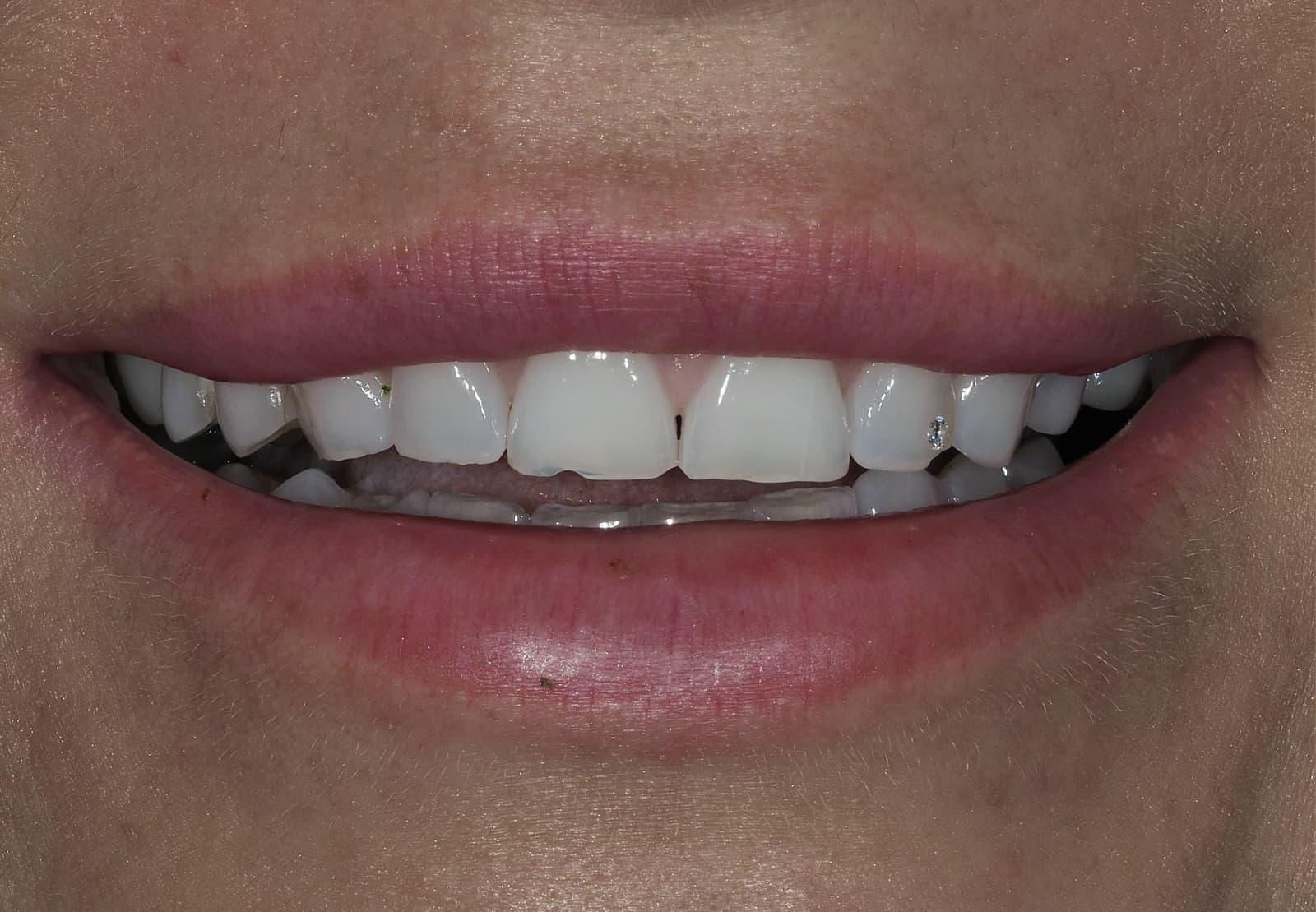
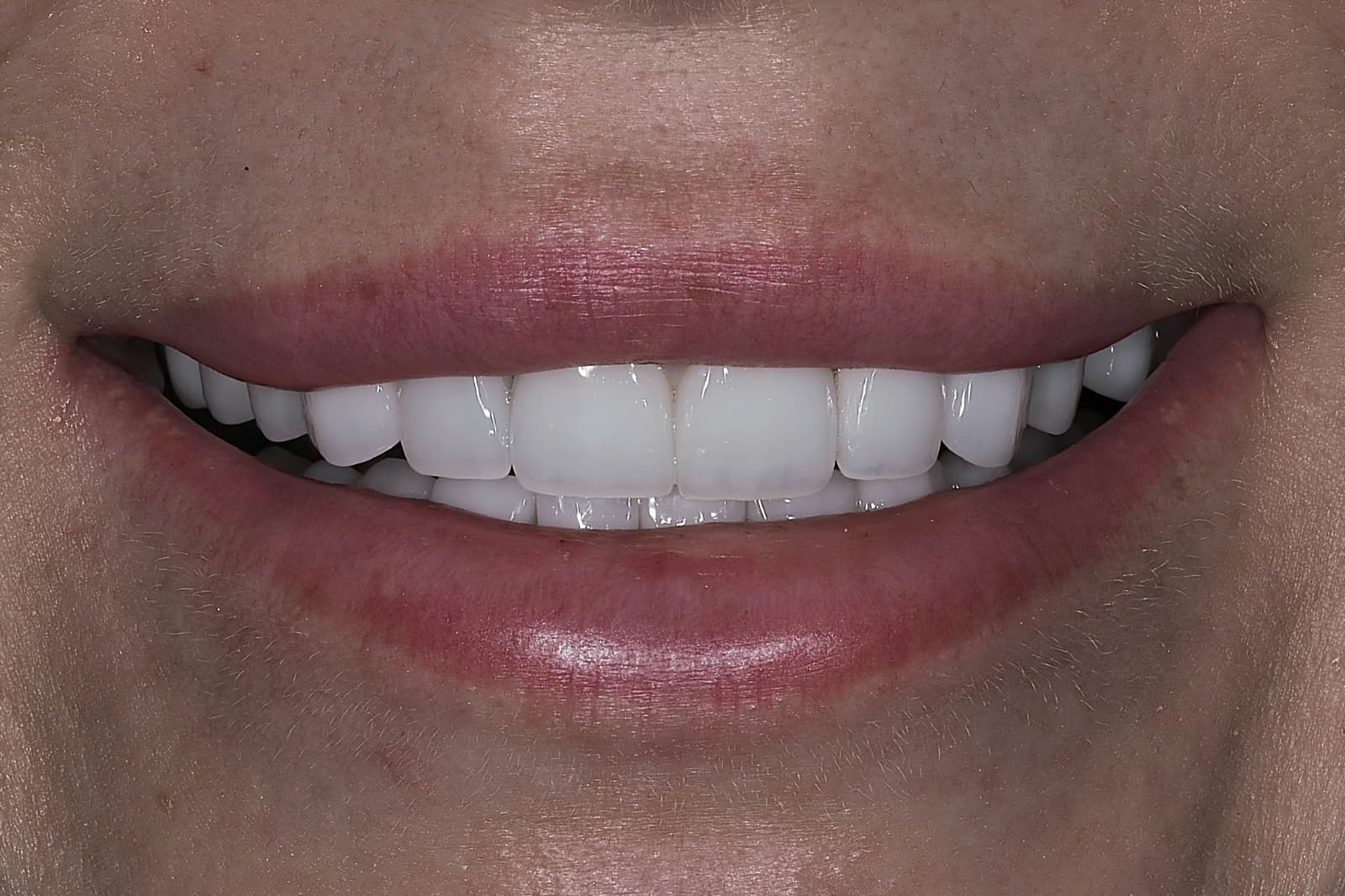
Drag to see what a full plan can change.
Pull the handle across to compare before and after. A rebuilt smile should not announce itself. It should simply look like teeth that were always yours.
 Before
After
Before
After
Photographs of patients treated at B Dental Studio. Every case is different. Individual results may vary.
What it sounds like when the whole mouth finally works again.
Full-mouth restoration is a long road, and the people who walk it have the clearest view of what it is really like. Their words are the ones worth reading.
Our patients describe it better than we can.
Questions we hear most often.
Clear answers, without pressure. If your question is not here, we are happy to talk it through at your consultation.
No. A smile makeover primarily focuses on appearance. Full-mouth restoration addresses dental health, structure, missing teeth, bite, and function, although cosmetic improvements may be incorporated into the plan.
No. Treatment should be selected tooth by tooth. Some teeth may need crowns, while others may be treated with fillings, bonding, inlays, onlays, implants, or preventive monitoring. Healthy teeth should not be treated without a clinical reason.
Often, some or many natural teeth can be preserved. Whether a specific tooth can be saved depends on the amount of healthy structure remaining, cracks, infection, gum and bone support, symptoms, and whether the tooth can be predictably restored.
The timeline varies considerably. Some plans can be completed over several months, while others take longer because of healing, orthodontic movement, implant treatment, or specialist coordination.
Yes. Comprehensive care is commonly divided into phases based on urgency, clinical sequence, healing, priorities, and practical considerations.
Temporary or provisional restorations may be used during certain phases. This depends on the procedures being completed and will be explained before treatment begins.
Not necessarily. Implants are one option for replacing missing or non-restorable teeth. Bridges, removable restorations, or preservation of existing teeth may be appropriate in other situations.
Yes. Existing dental work does not automatically require replacement because of its age. Dr. Bella evaluates its fit, structure, appearance, surrounding tooth health, and function.
You will not be judged. Many complex dental situations develop gradually because of fear, health conditions, finances, difficult past experiences, or simply not knowing where to begin. The first step is understanding the situation, not criticizing how you arrived there.
There is no single price because every treatment plan is different. Cost depends on the number and type of procedures, materials, specialist involvement, laboratory work, and treatment sequence. You should receive a clear plan before deciding how to proceed.
No restoration lasts forever. Longevity varies based on the material, bite, grinding or clenching, hygiene, diet, health, habits, and professional maintenance. Regular monitoring and protection are essential.
When dental problems have accumulated, the hardest part is often knowing where to begin.
A comprehensive consultation turns a collection of concerns into an organized plan. You will understand what is urgent, what can wait, what can be preserved, and which options are available.
There is no judgment and no expectation that you must commit to every phase immediately.
The first step is clarity.
More than new dental work. One thoughtful plan.
A full-mouth restoration should help you eat more comfortably, protect vulnerable teeth, restore stability, and feel confident that every decision belongs within one thoughtful plan.
B Dental Studio
10075 Jog Road, Suite 200
Boynton Beach, Florida 33437